








All Categories
Show more

Posts

Digital Addiction and Mental Health: Why It’s So Hard to Stop Scrolling

Digital Addiction and Mental Health: Why It’s So Hard to Stop Scrolling

Article | Harmful habits
Why does scrolling feel relaxing but leave you drained? This article explains how digital addiction affects mental health and how to build healthier screen habits.
How to Be a More Emotionally Mature Person in Relationships

How to Be a More Emotionally Mature Person in Relationships

Article | Relationship
Stress can quietly change the way we speak, react, and love. This article explains how emotional maturity helps us stop blaming others, manage our feelings, and protect the relationships that truly matter.
How to Handle Emotional Overwhelm During a Crisis

How to Handle Emotional Overwhelm During a Crisis

Article | Grief
When life feels unbearable, emotions can become confusing and intense. This article explains how to name what you feel, understand your reactions, and take one small step forward during a crisis.
Love: The Most Essential Force in Life—and the Most Misunderstood

Love: The Most Essential Force in Life—and the Most Misunderstood

Article | Emotions
When people think of love, they often think of romance. But psychology teaches us that love extends far beyond relationships. It is the experience of feeling safe, accepted, understood, valued, and emotionally connected. It is the quiet reassurance that says, "You matter, exactly as you are."
Healing Is Not Always Looking Happy. Sometimes Healing Looks Like…

Healing Is Not Always Looking Happy. Sometimes Healing Looks Like…

Article | Emotions

I love this topic because it gently challenges the unrealistic expectation that healing should always look positive or linear

Understanding The Workplace as a Psychological Battlefield

Understanding The Workplace as a Psychological Battlefield

Article | Business and Career
Picture a Monday morning. Your inbox holds 147 unread emails. Your to-do list overflows onto a second page. A performance review looms. Somewhere in the building, a colleague who started the same week as you has just been promoted. And you — despite having slept, showered, and arrived on time — feel something that is harder to name: a vague dread, a hollowness, a quiet voice whispering that you are not enough, that everyone will soon find out, that you cannot keep this up.
Financial Abuse in Relationships: Signs, Control, and the Right to Your Own Life

Financial Abuse in Relationships: Signs, Control, and the Right to Your Own Life

Article | Abuse and Violence
Financial abuse is one of the quietest forms of control in a relationship. It does not always look dramatic from the outside. Sometimes it sounds like advice.
How to Love Yourself: Self-Compassion, Self-Acceptance, and a Kinder Inner Voice

How to Love Yourself: Self-Compassion, Self-Acceptance, and a Kinder Inner Voice

Article | Self-esteem
Self-love is not about pretending to be perfect. It is about learning to treat yourself with honesty, kindness, and respect, even when you make mistakes or feel unsure of yourself.
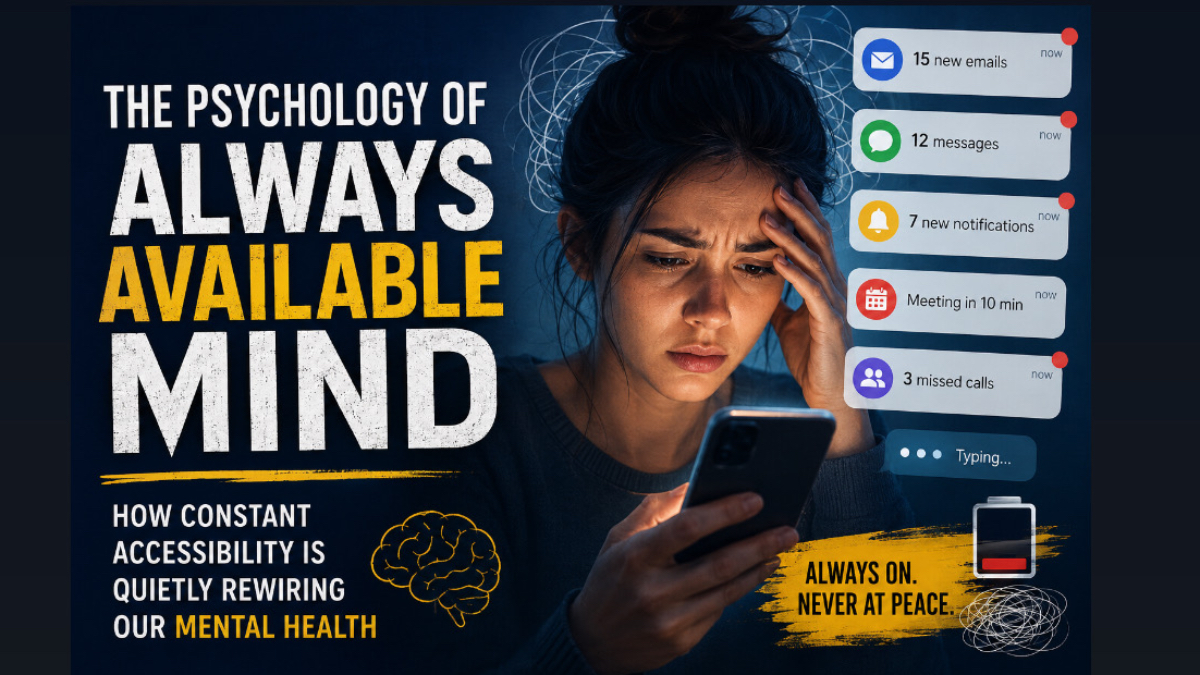
The Psychology of the “Always Available” Mind

The Psychology of the “Always Available” Mind

Article | Life
Being constantly reachable is increasing stress, reducing emotional recovery, weakening boundaries, and silently reshaping relationships, productivity, and psychological well-being.
How One Small Change Shifts Your Mind and Mood

How One Small Change Shifts Your Mind and Mood

Blog | Psychotherapy
Human thoughts, emotions, and body sensations are linked together like a chain. When you get stuck in a negative loop, you do not need a massive life makeover to feel better. Because everything is connected, making just one small change breaks the negative cycle and forces your brain to reset.
You need to be logged in to send messages
Login Sign up
To create your specialist profile, please log in to your account.
Login Sign up
You need to be logged in to contact us
Login Sign up
To create a new Question, please log in or create an account
Login Sign up
Share on other sites

If you are considering psychotherapy but do not know where to start, a free initial consultation is the perfect first step. It will allow you to explore your options, ask questions, and feel more confident about taking the first step towards your well-being.

It is a 30-minute, completely free meeting with a Mental Health specialist that does not obligate you to anything.

What are the benefits of a free consultation?

Who is a free consultation suitable for?

Important:

Potential benefits of a free initial consultation

During this first session: potential clients have the chance to learn more about you and your approach before agreeing to work together.

Offering a free consultation will help you build trust with the client. It shows them that you want to give them a chance to make sure you are the right person to help them before they move forward. Additionally, you should also be confident that you can support your clients and that the client has problems that you can help them cope with. Also, you can avoid any ethical difficult situations about charging a client for a session in which you choose not to proceed based on fit.

We've found that people are more likely to proceed with therapy after a free consultation, as it lowers the barrier to starting the process. Many people starting therapy are apprehensive about the unknown, even if they've had sessions before. Our culture associates a "risk-free" mindset with free offers, helping people feel more comfortable during the initial conversation with a specialist.

Another key advantage for Specialist

Specialists offering free initial consultations will be featured prominently in our upcoming advertising campaign, giving you greater visibility.


It's important to note that the initial consultation differs from a typical therapy session:

No Internet Connection It seems you’ve lost your internet connection. Please refresh your page to try again. Your message has been sent

