







All Categories
Show more

Posts

What Is Neurosis? Understanding Anxiety, OCD, and Stress-Related Symptoms

What Is Neurosis? Understanding Anxiety, OCD, and Stress-Related Symptoms

Article | Neuroses, emotional disorders
What does “neurosis” mean today? Learn how anxiety, intrusive thoughts, physical symptoms, and chronic stress may appear—and what modern treatment can offer.
Jealousy: Understanding the Emotion Behind Insecurity and Fear

Jealousy: Understanding the Emotion Behind Insecurity and Fear

Blog | Jealousy
Jealousy is an emotional response involving fear, insecurity, and the perceived threat of losing something valuable. It is a normal human emotion but can become problematic when it is excessive, irrational, or affects relationships. Common causes include low self-esteem, attachment insecurities, past experiences, and negative thinking patterns. Understanding triggers and developing emotional regulation skills can help manage jealousy in healthier ways.
Understanding Conflicts

Understanding Conflicts

Article | Conflicts
High stress triggers the sympathetic nervous system, impairing the prefrontal cortex (logic) and favoring the amygdala (impulse), which reduces empathy and problem-solving capacity.
Understanding Codependency

Understanding Codependency

Article | Codependency
Discover where true love ends and codependency begins. Learn to build healthy boundaries.Constant self-sacrifice isn't love. Uncover the roots of codependency and how to break free.
The Relationship You Miss Never Really Existed: Why Letting Go Feels So Hard

The Relationship You Miss Never Really Existed: Why Letting Go Feels So Hard

Article | Relationship
Heartbreak isn't always about losing a person—it can also be about losing the future you imagined with them. This article explores why people often struggle to move on from relationships that were emotionally unfulfilling, highlighting psychological concepts such as idealization, attachment, and counterfactual thinking. By understanding the difference between grieving reality and grieving potential, readers can gain insight into their emotions and take meaningful steps toward healing and healthier relationships.
Adjustment Disorder: Symptoms, Causes, and Treatment After Major Life Stress

Adjustment Disorder: Symptoms, Causes, and Treatment After Major Life Stress

Article | Mental disorder
A major loss, illness, divorce, or job change can leave you feeling anxious, exhausted, and unable to cope. Learn how adjustment disorder affects daily life and what can help restore emotional stability.
Why Your Psychiatrist May Recommend Psychological Testing: What to Expect

Why Your Psychiatrist May Recommend Psychological Testing: What to Expect

Article | Psychotherapy
A referral for psychological testing does not mean your doctor doubts you. Learn how structured tasks, interviews, and professional interpretation can clarify symptoms and support a more accurate diagnosis.
Psychiatric Medications Explained: Benefits, Risks, and What to Expect

Psychiatric Medications Explained: Benefits, Risks, and What to Expect

Article | Psychotherapy
Psychiatric medications can ease serious symptoms without taking away your personality. Learn how they work, what side effects may occur, and why individualized treatment matters.
Psychogenic Vomiting: When Emotional Stress Triggers Recurrent Vomiting

Psychogenic Vomiting: When Emotional Stress Triggers Recurrent Vomiting

Article | Stress
Recurrent vomiting is not always caused by digestive disease. Learn how emotional stress can affect the brain–gut connection, why medical evaluation comes first, and which treatments may help.
Calming the Chaos: Practical CBT Tools for Managing Daily Anxiety

Calming the Chaos: Practical CBT Tools for Managing Daily Anxiety

Blog | Psychotherapy
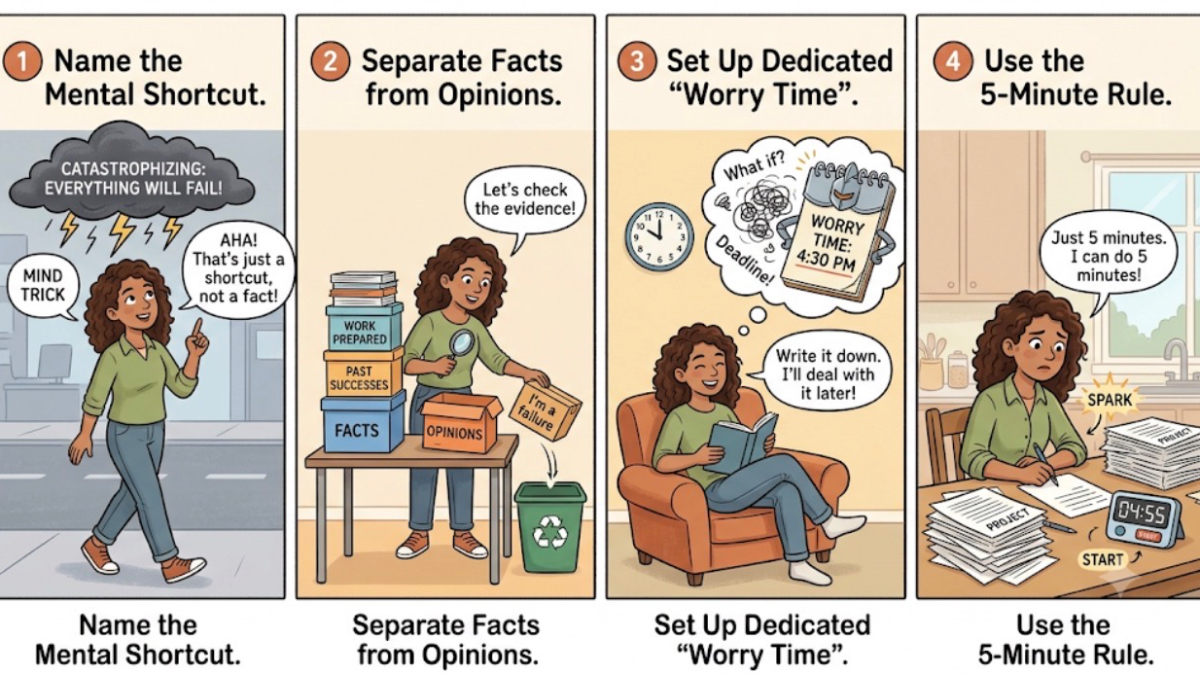
Daily anxiety often stems from how we process stress, but simple Cognitive Behavioral Therapy (CBT) techniques can help break this cycle. By learning to identify mental shortcuts, separate facts from anxious thoughts, schedule dedicated worry time, and use the 5-minute rule, anyone can regain focus and emotional stability in their everyday life.
You need to be logged in to send messages
Login Sign up
To create your specialist profile, please log in to your account.
Login Sign up
You need to be logged in to contact us
Login Sign up
To create a new Question, please log in or create an account
Login Sign up
Share on other sites

If you are considering psychotherapy but do not know where to start, a free initial consultation is the perfect first step. It will allow you to explore your options, ask questions, and feel more confident about taking the first step towards your well-being.

It is a 30-minute, completely free meeting with a Mental Health specialist that does not obligate you to anything.

What are the benefits of a free consultation?

Who is a free consultation suitable for?

Important:

Potential benefits of a free initial consultation

During this first session: potential clients have the chance to learn more about you and your approach before agreeing to work together.

Offering a free consultation will help you build trust with the client. It shows them that you want to give them a chance to make sure you are the right person to help them before they move forward. Additionally, you should also be confident that you can support your clients and that the client has problems that you can help them cope with. Also, you can avoid any ethical difficult situations about charging a client for a session in which you choose not to proceed based on fit.

We've found that people are more likely to proceed with therapy after a free consultation, as it lowers the barrier to starting the process. Many people starting therapy are apprehensive about the unknown, even if they've had sessions before. Our culture associates a "risk-free" mindset with free offers, helping people feel more comfortable during the initial conversation with a specialist.

Another key advantage for Specialist

Specialists offering free initial consultations will be featured prominently in our upcoming advertising campaign, giving you greater visibility.


It's important to note that the initial consultation differs from a typical therapy session:

No Internet Connection It seems you’ve lost your internet connection. Please refresh your page to try again. Your message has been sent

