



All Categories
Show more

Posts about Emotions

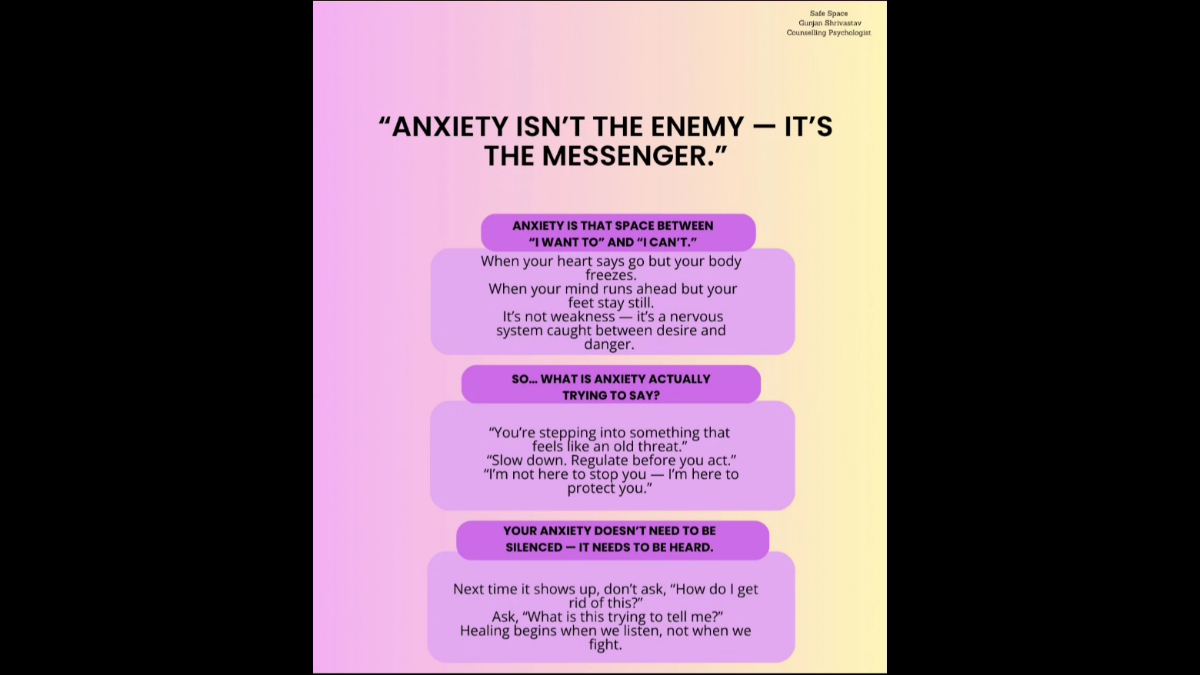
Anxiety Isn’t the Enemy — It’s the Messenger

Anxiety Isn’t the Enemy — It’s the Messenger

Article | Emotions
Anxiety is often seen as something to fight or eliminate, but it may actually be the nervous system’s way of communicating fear, overwhelm, or unresolved emotional experiences. It exists in the space between wanting to move forward and feeling unsafe doing so. Instead of silencing anxiety, healing begins when we listen to what it is trying to tell us with curiosity, compassion, and self-awareness.
Digital Nostalgia: Why People Emotionally Escape Into the Past

Digital Nostalgia: Why People Emotionally Escape Into the Past

Article | Emotions
People increasingly use nostalgic memories and retro culture to psychologically cope with uncertainty, stress, emotional exhaustion, and rapid societal change.
8 Personality Types Based on Your Core Emotion — Which One Are You?

8 Personality Types Based on Your Core Emotion — Which One Are You?

Article | Emotions
Your personality isn't random — it's built around one dominant emotion. Plutchik's model maps 8 core emotions to 8 distinct personality types. Find out which emotional pattern quietly runs your life.
Why Am I So Tired? The Emotional Side of Fatigue Nobody Talks About

Why Am I So Tired? The Emotional Side of Fatigue Nobody Talks About

Article | Emotions
You haven't lifted a finger yet — so why does exhaustion hit the moment you think about that task? Your brain might be using fatigue as a hidden emotion. Here's the science behind it.
Emotional Regulation

Emotional Regulation

Article | Emotions
Strategies to Improving Emotional Regulation in the Classroom.
Emotional Echoes: Why Past Feelings Resurface Without Warning

Emotional Echoes: Why Past Feelings Resurface Without Warning

Article | Emotions
Unresolved emotions can resurface unexpectedly, triggered by subtle cues, reflecting the brain’s attempt to process incomplete emotional experiences.
How to Process Emotions in a Healthy Way: Stop Suppressing, Start Healing

How to Process Emotions in a Healthy Way: Stop Suppressing, Start Healing

Article | Emotions
Every emotion you feel has a purpose. When you suppress it, the pressure builds. Learn a simple three-step method to finally process what you feel — and free yourself from emotional overload.
Emotional Numbness Causes: Why You Can't Feel Emotions and How to Overcome It

Emotional Numbness Causes: Why You Can't Feel Emotions and How to Overcome It

Article | Emotions
Someone yells at you, and you freeze—no anger, no words, nothing. Just blank. Learn why your emotions hit pause and the exact steps to feel alive again.
Why Do I Cry for No Reason? What Your Unexplained Tears Are Really Telling You

Why Do I Cry for No Reason? What Your Unexplained Tears Are Really Telling You

Article | Emotions
Your tears aren't random. They're red flags from your body—and ignoring them could be making everything worse. Discover what's really happening.
Alexithymia: Why You Can't Identify or Describe Your Emotions

Alexithymia: Why You Can't Identify or Describe Your Emotions

Article | Emotions
You feel something—tight chest, heaviness—but can’t name it. This guide explains alexithymia, why it happens, how it affects relationships and the body, and what can help.
You need to be logged in to send messages
Login Sign up
To create your specialist profile, please log in to your account.
Login Sign up
You need to be logged in to contact us
Login Sign up
To create a new Question, please log in or create an account
Login Sign up
Share on other sites

If you are considering psychotherapy but do not know where to start, a free initial consultation is the perfect first step. It will allow you to explore your options, ask questions, and feel more confident about taking the first step towards your well-being.

It is a 30-minute, completely free meeting with a Mental Health specialist that does not obligate you to anything.

What are the benefits of a free consultation?

Who is a free consultation suitable for?

Important:

Potential benefits of a free initial consultation

During this first session: potential clients have the chance to learn more about you and your approach before agreeing to work together.

Offering a free consultation will help you build trust with the client. It shows them that you want to give them a chance to make sure you are the right person to help them before they move forward. Additionally, you should also be confident that you can support your clients and that the client has problems that you can help them cope with. Also, you can avoid any ethical difficult situations about charging a client for a session in which you choose not to proceed based on fit.

We've found that people are more likely to proceed with therapy after a free consultation, as it lowers the barrier to starting the process. Many people starting therapy are apprehensive about the unknown, even if they've had sessions before. Our culture associates a "risk-free" mindset with free offers, helping people feel more comfortable during the initial conversation with a specialist.

Another key advantage for Specialist

Specialists offering free initial consultations will be featured prominently in our upcoming advertising campaign, giving you greater visibility.


It's important to note that the initial consultation differs from a typical therapy session:

No Internet Connection It seems you’ve lost your internet connection. Please refresh your page to try again. Your message has been sent

