



All Categories
Show more

Posts about Sleep disorders, insomnia

You’re Not ‘Bad at Sleeping’ — You Just Need Better Sleep Hygiene

You’re Not ‘Bad at Sleeping’ — You Just Need Better Sleep Hygiene

Article | Sleep disorders, insomnia
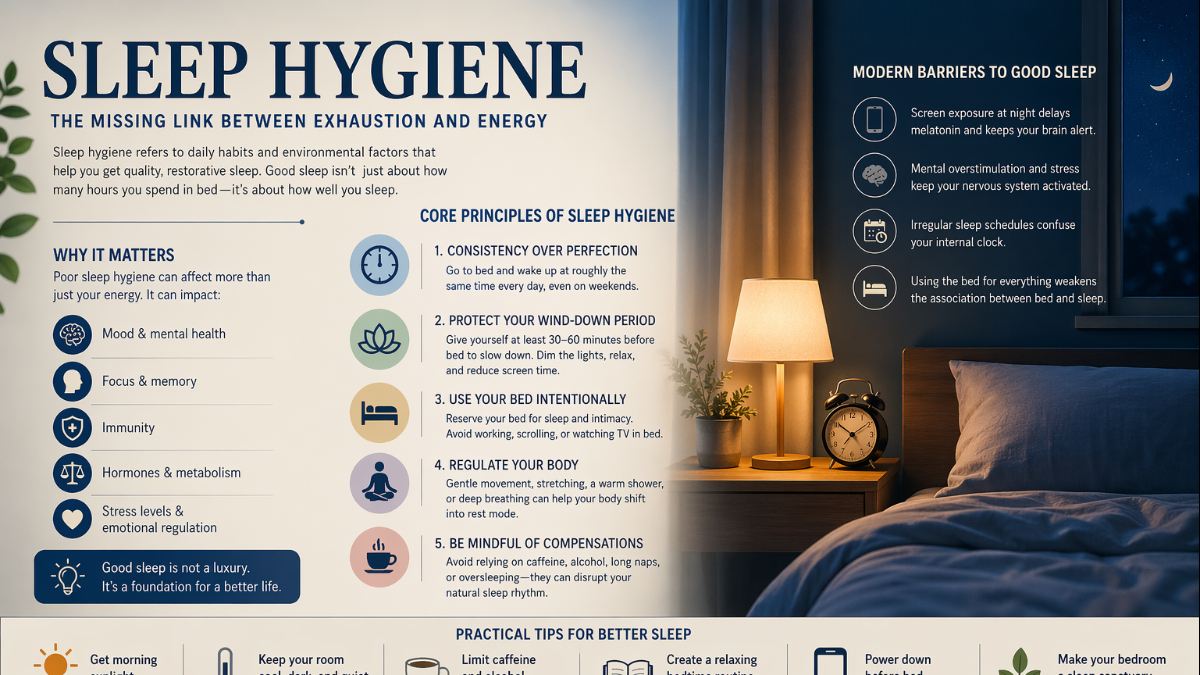
Sleep is often treated as something passive—something that just “happens.” But in reality, it’s a skill shaped by how you live your day. When sleep hygiene improves, it doesn’t just give you better nights—it gives you clearer thinking, steadier emotions, and a more regulated nervous system. In a fast-paced, overstimulated world, good sleep hygiene is not a luxury. It’s a necessity.
Lucid Dreaming and Sleep Paralysis: What Your Brain Does Every Night Will Shock

Lucid Dreaming and Sleep Paralysis: What Your Brain Does Every Night Will Shock

Blog | Sleep disorders, insomnia
You hallucinated last night — and science says that's completely normal. From lucid dreaming to sleep paralysis, here's what actually happens inside your brain while you sleep. The answer is stranger than any dream
The Silent Struggle of Sleep Disorders

The Silent Struggle of Sleep Disorders

Article | Sleep disorders, insomnia
Sleep disorders are common yet often overlooked, affecting mood, cognition, and physical health. Insomnia is linked to anxiety, depression, and chronic stress, often fueled by hyperarousal and maladaptive sleep habits. Evidence-based approaches like CBT-I help break the cycle. Addressing sleep early improves emotional balance, productivity, and overall wellbeing.
Revenge Bedtime Procrastination: How Late-Night Scrolling Is Stealing Your Health

Revenge Bedtime Procrastination: How Late-Night Scrolling Is Stealing Your Health

Article | Sleep disorders, insomnia
You're not addicted to your phone. You're reclaiming the only hours that feel like yours — and it's quietly wrecking your health.
Why Am I Always Tired But Can't Sleep? Understanding the Sleep-Energy Paradox

Why Am I Always Tired But Can't Sleep? Understanding the Sleep-Energy Paradox

Article | Sleep disorders, insomnia
Your brain has a clock. Your cells have power plants. When they're out of sync, exhaustion keeps you awake. Here's how to fix both—naturally.
Can't Move When Waking Up? Sleep Paralysis Causes, Symptoms, and Treatment

Can't Move When Waking Up? Sleep Paralysis Causes, Symptoms, and Treatment

Article | Sleep disorders, insomnia
Not your arms, not your legs, not even a finger. Your body feels frozen, pinned to the mattress like something invisible is holding you down. Your chest feels heavy, as if someone — or something — is sitting right on top of you.
Pathological Daytime Sleepiness and Aging: Key Causes and Solutions

Pathological Daytime Sleepiness and Aging: Key Causes and Solutions

Article | Sleep disorders, insomnia
While many families struggle to convince their loved ones to see a doctor, understanding the biological "why" behind this phenomenon can help determine when it is a manageable part of aging and when it is a red flag for something deeper.
Stages of sleep: Understanding your sleep cycle

Stages of sleep: Understanding your sleep cycle

Blog | Sleep disorders, insomnia
To understand more on why sleep is crucial, try to think of your body as a factory carrying out important functions and as we sleep, your body begins its night shift work. Sleep allows the brain and body to eliminate toxins from the body.
Can Lying to Yourself About How You Slept Actually Make You Smarter (or Dumber)?

Can Lying to Yourself About How You Slept Actually Make You Smarter (or Dumber)?

Article | Sleep disorders, insomnia
You wake up. Your head feels a little heavy, and your sleep felt merely mediocre. You sit down at the computer, open some attention and thinking-speed tests, and suddenly notice your brain is working worse than usual.
Why the First Night in a New Place Turns into a Restless Nightmare

Why the First Night in a New Place Turns into a Restless Nightmare

Article | Sleep disorders, insomnia
Picture this: you've just arrived at a hotel after a long journey, toss your suitcase on the floor, and dive straight into bed. The room feels alien—the unfamiliar street noise, the strange scent of the bed linens.
You need to be logged in to send messages
Login Sign up
To create your specialist profile, please log in to your account.
Login Sign up
You need to be logged in to contact us
Login Sign up
To create a new Question, please log in or create an account
Login Sign up
Share on other sites

If you are considering psychotherapy but do not know where to start, a free initial consultation is the perfect first step. It will allow you to explore your options, ask questions, and feel more confident about taking the first step towards your well-being.

It is a 30-minute, completely free meeting with a Mental Health specialist that does not obligate you to anything.

What are the benefits of a free consultation?

Who is a free consultation suitable for?

Important:

Potential benefits of a free initial consultation

During this first session: potential clients have the chance to learn more about you and your approach before agreeing to work together.

Offering a free consultation will help you build trust with the client. It shows them that you want to give them a chance to make sure you are the right person to help them before they move forward. Additionally, you should also be confident that you can support your clients and that the client has problems that you can help them cope with. Also, you can avoid any ethical difficult situations about charging a client for a session in which you choose not to proceed based on fit.

We've found that people are more likely to proceed with therapy after a free consultation, as it lowers the barrier to starting the process. Many people starting therapy are apprehensive about the unknown, even if they've had sessions before. Our culture associates a "risk-free" mindset with free offers, helping people feel more comfortable during the initial conversation with a specialist.

Another key advantage for Specialist

Specialists offering free initial consultations will be featured prominently in our upcoming advertising campaign, giving you greater visibility.


It's important to note that the initial consultation differs from a typical therapy session:

No Internet Connection It seems you’ve lost your internet connection. Please refresh your page to try again. Your message has been sent

