







All Categories
Show more

Posts about Psychotherapy

Calming the Chaos: Practical CBT Tools for Managing Daily Anxiety

Calming the Chaos: Practical CBT Tools for Managing Daily Anxiety

Blog | Psychotherapy
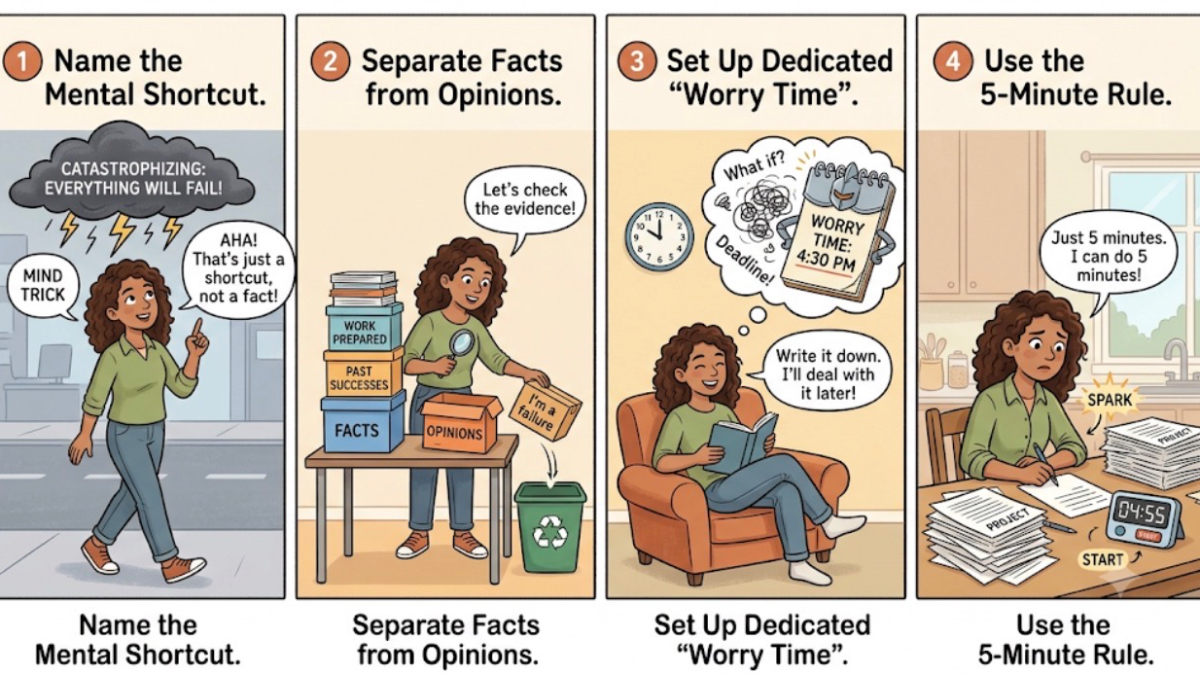
Daily anxiety often stems from how we process stress, but simple Cognitive Behavioral Therapy (CBT) techniques can help break this cycle. By learning to identify mental shortcuts, separate facts from anxious thoughts, schedule dedicated worry time, and use the 5-minute rule, anyone can regain focus and emotional stability in their everyday life.
Understanding Depression: Science, Psychology, and Islamic Wisdom

Understanding Depression: Science, Psychology, and Islamic Wisdom

Blog | Psychotherapy
Depression is often misunderstood as simple sadness, but it is actually a real medical, emotional, and physical condition that affects how a person thinks, feels, and handles daily life. This comprehensive guide breaks down depression into simple, everyday language. It explains the scientific and psychological reasons behind depression, explores the gentle and compassionate Islamic perspective on emotional pain, and provides practical, professional guidance for holistic healing.
When Anxiety Takes Over: How Gratitude Actually Changes the Brain's Stress Response

When Anxiety Takes Over: How Gratitude Actually Changes the Brain's Stress Response

Blog | Psychotherapy
Anxiety often traps us in a loop of "what ifs" and worst-case scenarios. While gratitude is sometimes dismissed as toxic positivity, when used intentionally, it acts as a grounded psychological tool that shifts our nervous system out of threat mode and back into balance.
Marilyn Monroe and Her Therapist: When Boundaries Began to Blur

Marilyn Monroe and Her Therapist: When Boundaries Began to Blur

Blog | Psychotherapy
Marilyn Monroe sought safety and emotional support, but her relationship with her therapist gradually became unusually close. Her story reveals why trust, independence, and clear professional boundaries matter in therapy.
OCD Therapy: How ERP Helps Break the Cycle of Intrusive Thoughts and Compulsions

OCD Therapy: How ERP Helps Break the Cycle of Intrusive Thoughts and Compulsions

Article | Psychotherapy
Intrusive thoughts create anxiety, while compulsions bring only temporary relief. Learn how ERP therapy helps weaken this cycle and restore freedom in everyday life.
Biofeedback Therapy: How to Manage Stress, Anxiety, and Muscle Tension

Biofeedback Therapy: How to Manage Stress, Anxiety, and Muscle Tension

Article | Psychotherapy
Biofeedback makes the body’s hidden stress reactions visible. Learn how breathing, heart rate, and muscle tension can become signals that help you regain calm and emotional balance.
EEG Neurofeedback: Training the Brain to Self-Regulate

EEG Neurofeedback: Training the Brain to Self-Regulate

Article | Psychotherapy
Sensors measure brainwave activity and transform it into immediate feedback. With practice, the brain may gradually learn to recognize and maintain states linked to relaxation or concentration.
Psychotherapy: A Space for Trust, Meaning, and Change

Psychotherapy: A Space for Trust, Meaning, and Change

Article | Psychotherapy
Psychotherapy is more than advice or symptom relief. It is an honest dialogue that helps us understand emotional pain, build trust, and face the present with greater awareness.
Therapy or Medication: Do You Really Have to Choose?

Therapy or Medication: Do You Really Have to Choose?

Article | Psychotherapy
Therapy and medication work in different ways—but together, they may provide stronger support. Learn when combined treatment can help and how to choose the right approach.
The Silent Burnout: 5 Warning Signs You’re Overwhelmed (And How to Reset)

The Silent Burnout: 5 Warning Signs You’re Overwhelmed (And How to Reset)

Blog | Psychotherapy
Burnout doesn't happen overnight—it creeps in slowly through subtle changes in your energy, mood, and daily routines. In this post, we explore five frequently overlooked signs of emotional and mental exhaustion, along with practical, compassionate steps you can take today to reclaim your peace and reset your mental well-being
You need to be logged in to send messages
Login Sign up
To create your specialist profile, please log in to your account.
Login Sign up
You need to be logged in to contact us
Login Sign up
To create a new Question, please log in or create an account
Login Sign up
Share on other sites

If you are considering psychotherapy but do not know where to start, a free initial consultation is the perfect first step. It will allow you to explore your options, ask questions, and feel more confident about taking the first step towards your well-being.

It is a 30-minute, completely free meeting with a Mental Health specialist that does not obligate you to anything.

What are the benefits of a free consultation?

Who is a free consultation suitable for?

Important:

Potential benefits of a free initial consultation

During this first session: potential clients have the chance to learn more about you and your approach before agreeing to work together.

Offering a free consultation will help you build trust with the client. It shows them that you want to give them a chance to make sure you are the right person to help them before they move forward. Additionally, you should also be confident that you can support your clients and that the client has problems that you can help them cope with. Also, you can avoid any ethical difficult situations about charging a client for a session in which you choose not to proceed based on fit.

We've found that people are more likely to proceed with therapy after a free consultation, as it lowers the barrier to starting the process. Many people starting therapy are apprehensive about the unknown, even if they've had sessions before. Our culture associates a "risk-free" mindset with free offers, helping people feel more comfortable during the initial conversation with a specialist.

Another key advantage for Specialist

Specialists offering free initial consultations will be featured prominently in our upcoming advertising campaign, giving you greater visibility.


It's important to note that the initial consultation differs from a typical therapy session:

No Internet Connection It seems you’ve lost your internet connection. Please refresh your page to try again. Your message has been sent

