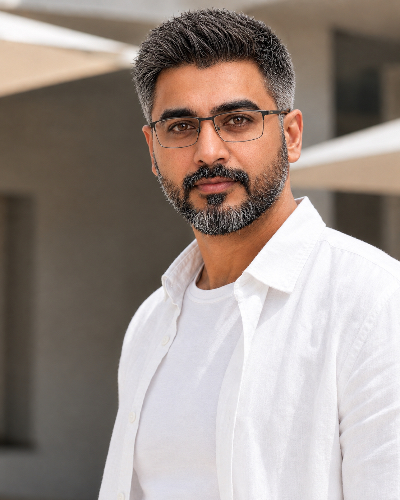
Maybe Your Parents Weren’t the Villains....Maybe They Were Limited Humans Too..?!





According to me....
.....Sometimes healing begins when we stop asking, “Who was wrong?” and start asking, “What can I do differently now?”
There is a child inside many adults who is still waiting.
Waiting to be understood.
Waiting for an apology.
Waiting for someone to say, “You were not the problem.”
Waiting for the parent to finally understand what those words, comparisons, silences, punishments, expectations, or absences did to them.
And sometimes, that waiting lasts for decades.
But there comes a point in life when healing asks us a difficult question:
What if the person you needed to change simply didn't have the tools to change?
Not because they didn't love you.
But because they were human.
- They were raised by another generation.
- They inherited fears they never examined.
- They followed cultural rules they were never encouraged to question.
- They confused discipline with love.
- They confused obedience with respect.
- They believed providing materially was the same as providing emotionally.
- They repeated what had been done to them because it was the only parenting language they knew.
And perhaps, in their own imperfect way, they were trying.
That does not erase your pain.
But understanding the limitation can sometimes free you from carrying the pain forever.
The Child Who Kept Wondering, “What's Wrong With Me?”
Imagine a child growing up in a home where love existed—but did not always feel like love.
The child was compared with other children.
“Look at what they are doing.”
The child was criticized more often than appreciated.
“You should have done better.”
Their feelings were dismissed.
“Stop being so sensitive.”
Their questions were treated as disrespect.
“Don't argue. Just listen.”
Their dreams were measured against what the family believed was practical, respectable, safe, or culturally acceptable.
So the child learned something very early:
Perhaps being myself is not enough.
They became careful.
- Careful about what they said.
- Careful about what they wanted.
- Careful about whom they trusted.
- Careful about showing emotion.
Eventually, the child became an adult.
And everyone saw someone strong.
But inside, there was still a quiet question:
“Why don't I feel good enough?”
That question can follow a person into relationships, careers, friendships, marriage, parenting, and even success.
Sometimes we spend years trying to earn the validation we could not receive as children.
- We become achievers.
- We become providers.
- We become responsible.
- We become the person everyone can depend on.
And yet, somewhere inside, we are still trying to prove:
“I am worthy now. Please see me.”
But What If the Story Is Bigger Than Blame?
As adults, we sometimes discover something uncomfortable.
Our parents were also children once.
They had parents.
They had fears.
They had disappointments.
They had dreams that may never have happened.
They lived through social expectations that we may never fully understand.
Many were taught that survival mattered more than emotional expression.
They may have grown up believing:
- A good child obeys.
- A strong person doesn't complain.
- Family reputation matters.
- Feelings should remain private.
- Children should be grateful, not questioning.
- Providing food, education, shelter, and security is enough.
Their emotional vocabulary may have been incredibly small.
They may have known how to say:
- “Study.”
- “Work hard.”
- “Be responsible.”
- “Don't embarrass the family.”
But perhaps they never learned how to say:
- “I'm proud of you.”
- “I understand why you're hurting.”
- “Tell me what you need.”
- “You don't have to earn my love.”
That difference matters.
And yet, it does not necessarily mean there was no love.
Sometimes there was love without emotional language.
Sometimes there was protection without emotional understanding.
Sometimes there was sacrifice without the ability to communicate affection.
Sometimes people gave what they had—not what we needed.
And that is one of the hardest truths adulthood teaches us.
Someone can love you deeply and still hurt you deeply.
Both things can be true.
Understanding Is Not the Same as Excusing
This is where healing becomes mature.
Understanding your parents does not require you to rewrite your childhood.
You don't have to say:
“It didn't hurt.”
If it hurt, it hurt.
You don't have to pretend:
“They were perfect.”
They weren't.
You don't have to deny:
“I deserved better.”
Perhaps you did.
But you also don't have to spend the rest of your life turning your parents into villains in order to validate your own experience.
You can say:
“I understand why you became the person you became. And I also understand why some things you did hurt me.”
That is not betrayal.
That is emotional maturity.
Because healing isn't about choosing between compassion for your parents and compassion for yourself.
It is learning to hold both.
You Don't Have to Keep Fighting the Same Battle
There is a stage in adulthood when we finally realize:
We cannot heal by repeatedly demanding that someone become the parent we needed them to be.
Sometimes we keep returning to the same conversation.
- Explaining.
- Arguing.
- Proving.
- Hoping.
- Waiting.
Maybe this time they'll understand.
Maybe this time they'll apologize.
Maybe this time they'll finally acknowledge what happened.
And sometimes they do.
But sometimes they don't.
Not necessarily because they are cruel.
Sometimes because their emotional capacity simply does not extend that far.
And that realization can be painful.
But it can also be liberating.
Because when you stop waiting for someone else to give you permission to heal, something changes.
You begin giving yourself permission.
Distance Can Be Love Too
There is a misconception that loving your parents means giving them unlimited access to your life.
It doesn't.
Sometimes love needs boundaries.
Sometimes the healthiest relationship is not constant closeness.
Sometimes it is a respectful distance.
- You can answer the phone without discussing everything.
- You can visit without surrendering your emotional stability.
- You can care without becoming responsible for their emotions.
- You can respect their choices without allowing those choices to dictate yours.
You can say:
“I love you. But I cannot live this way anymore.”
That is not necessarily rejection.
It may be self-respect.
A boundary is not always a wall against love. Sometimes it is the structure that allows love to exist without destroying your peace.
You don't have to hate someone to create distance.
You don't have to punish someone to protect yourself.
And you don't have to feel guilty because you finally learned to say, “This is where I stop.”
Forgiveness Does Not Mean Forgetting
Forgiveness is often misunderstood.
Forgiveness does not mean saying:
“It was okay.”
It means:
“I refuse to let what happened control the rest of my life.”
You may remember.
You may still feel sadness.
Certain memories may still hurt.
You may never have the relationship you imagined.
Healing doesn't require pretending otherwise.
Sometimes forgiveness is simply putting down a burden you have carried for too long.
Not for them.
For you.
And Then Something Beautiful Happens
One day, the child who spent years wondering what was wrong with them begins asking a different question:
“What can I do with what I have learned?”
That question changes everything.
- Maybe you were not given the emotional vocabulary you needed.
So you learn it. - Maybe nobody taught you healthy communication.
So you practice it. - Maybe you grew up around criticism.
So you learn encouragement. - Maybe your feelings were dismissed.
So you learn to listen. - Maybe boundaries were never respected.
So you learn to respect other people's boundaries. - Maybe you were compared.
So you stop comparing your children. - Maybe you were afraid to make mistakes.
So you teach the next generation that mistakes are part of learning.
And suddenly, your story is no longer only about what happened to you.
It becomes about what you choose to do with what happened to you.
You may not have received everything you needed. But you can become the person who gives the next generation what you once needed.
That is generational growth.
Turn Survival Into Wisdom
Your difficult experiences do not automatically make you wise.
But reflection can.
- Pain can become bitterness.
Or it can become awareness. - Confusion can become shame.
Or it can become curiosity. - Survival can become hypervigilance.
Or, with healing, it can become emotional intelligence.
The difference is what we do with the experience.
We can spend our entire lives asking:
“Why did they do this to me?”
Or eventually begin asking:
“What did I learn from this, and what will I choose not to repeat?”
That is where the next generation begins.
Not when we become perfect.
But when we become conscious.
To Those Who Still Have Their Parents
If your parents are still alive, perhaps you don't need to wait for the perfect relationship.
You don't need every conversation to end with agreement.
You don't need them to understand every decision you make.
You don't need them to become completely different people.
Maybe you simply need a relationship that is healthy enough for where you are now.
- Keep the love that feels genuine.
- Keep the respect that feels authentic.
- Keep the memories that bring warmth.
- And where necessary, keep the boundaries that protect your peace.
You can visit.
You can call.
You can help.
You can celebrate them.
And you can still have a life that belongs to you.
You can love your parents without living inside their limitations.
A Thank You to the Imperfect Parents
There is also something worth saying to the parents who never knew they were teaching us lessons.
Thank you.
Not because the pain was good.
Not because children should have to suffer to become strong.
But because, sometimes unknowingly, you showed us what we wanted to change.
- You showed us the importance of listening.
- You showed us why emotional safety matters.
- You showed us why children need encouragement.
- You showed us why communication matters.
- You showed us why love needs language.
- You showed us that culture can guide us—but it should not imprison us.
And perhaps, without intending to, you gave us a responsibility:
to build something better.
So thank you to the imperfect parents.
The parents who were learning while raising us.
The parents who carried their own unresolved histories.
The parents who sometimes got it right and sometimes got it terribly wrong.
The parents who gave what they could.
The parents who didn't always know what we needed.
We can acknowledge their limitations without romanticizing our pain.
We can appreciate their sacrifices without denying our wounds.
We can respect where they came from without remaining trapped there.
That is the balance.
You Are Not a Bad Son or Daughter Because You Need Boundaries
If you struggle with your relationship with your parents, please remember this:
- Needing space does not automatically mean you are ungrateful.
- Wanting emotional safety does not make you selfish.
- Choosing your own life does not make you disrespectful.
- Saying no does not make you a bad child.
- And needing time to heal does not mean you don't love your family.
Sometimes the most loving thing you can do for a relationship is stop forcing it to look like something it cannot currently be.
Let it breathe.
Let yourself grow.
Let expectations soften.
Let your identity exist outside your family's definition of you.
Perhaps This Is How Generations Heal
We cannot rewrite the childhood we received.
We cannot go back and give our younger selves the words we needed to hear.
We cannot make every parent understand everything.
But we can do something extraordinary.
We can become the interruption in the pattern.
- We can become the parent who listens.
- The partner who communicates.
- The friend who doesn't judge.
- The mentor who encourages.
- The leader who understands that people are human.
- The adult who knows that strength and softness can coexist.
We can take what was inherited and examine it.
Keep what is healthy.
Release what is harmful.
Transform what needs to change.
And pass something healthier forward.
Healing is not becoming untouched by your past. It is learning how to stop your past from becoming someone else's future.
Perhaps that is the real meaning of generational healing.
Not hating the people who came before us.
Not pretending everything was perfect.
Not blaming ourselves for what we didn't know as children.
But understanding.
Accepting.
Setting boundaries.
Growing.
And choosing differently.
The Child Grows Up
And one day, that little child looks back.
Not with the same anger.
Not necessarily with complete peace.
But with understanding.
They finally realize:
“Maybe they didn't know how to give me everything I needed.”
Then another realization follows:
“But I know now.”
And that is powerful.
Because the story doesn't end with what your parents couldn't give you.
It continues with what you choose to give yourself—and what you choose to give the people who come after you.
We may not be able to rewrite the childhood we received.
But we can decide what kind of adulthood we create.
We can decide what kind of parent, mentor, partner, friend, and human being we become.
We can decide that our children will inherit more than our fears.
- They will inherit our awareness.
- They will inherit our conversations.
- They will inherit our emotional courage.
- They will inherit our willingness to say:
“This stopped with me.”
And perhaps that is how generations heal—
not by hating the past, but by understanding it and choosing differently.
A Reflection from Dr. Sameer Adtani
Healing is not about becoming better than our parents. It is about becoming more conscious than the circumstances that shaped us. We can carry compassion for where our families came from while still choosing a healthier direction for where we are going. Emotional wellbeing begins when we stop fighting yesterday for permission to live today.....and start becoming the person our future generations will feel safe with.
— Dr. Sameer Adtani