







All Categories
Show more

Posts

Baby Blues or Postpartum Depression — How to Tell the Difference

Baby Blues or Postpartum Depression — How to Tell the Difference

Article | Depression
To understand postpartum depression, we must first establish a baseline for depression itself. Depression is a significant mental health disorder characterized by a persistently low mood and a markedly reduced ability to experience pleasure.
Coping with Loss: 10 Things That Actually Help When You're Grieving

Coping with Loss: 10 Things That Actually Help When You're Grieving

Article | Grief
For as long as human beings have walked this earth, we've faced loss. We've buried loved ones, said goodbyes we weren't ready for, and somehow kept breathing through moments that felt unbearable.
Dopamine Detox, Motivation, and Mental Health: What the Science Really Says

Dopamine Detox, Motivation, and Mental Health: What the Science Really Says

Article | Mental health
Everyone is talking about dopamine these days — podcasters, wellness coaches, self-help gurus, and neuroscience bloggers all name it as the hidden force behind everything from binge-eating to endless scrolling.
Testosterone: The Most Misunderstood Hormone in the Human Body

Testosterone: The Most Misunderstood Hormone in the Human Body

Article | Self-care
There is probably no hormone on earth that has been more hyped, more feared, and more misrepresented than testosterone. It gets credit for ambition, aggression, athletic dominance, and sexual desire.
The Psychology of Emotional Detachment

The Psychology of Emotional Detachment

Article | Psychology
Emotional detachment can protect mental health but may also limit intimacy, depending on awareness and psychological flexibility.
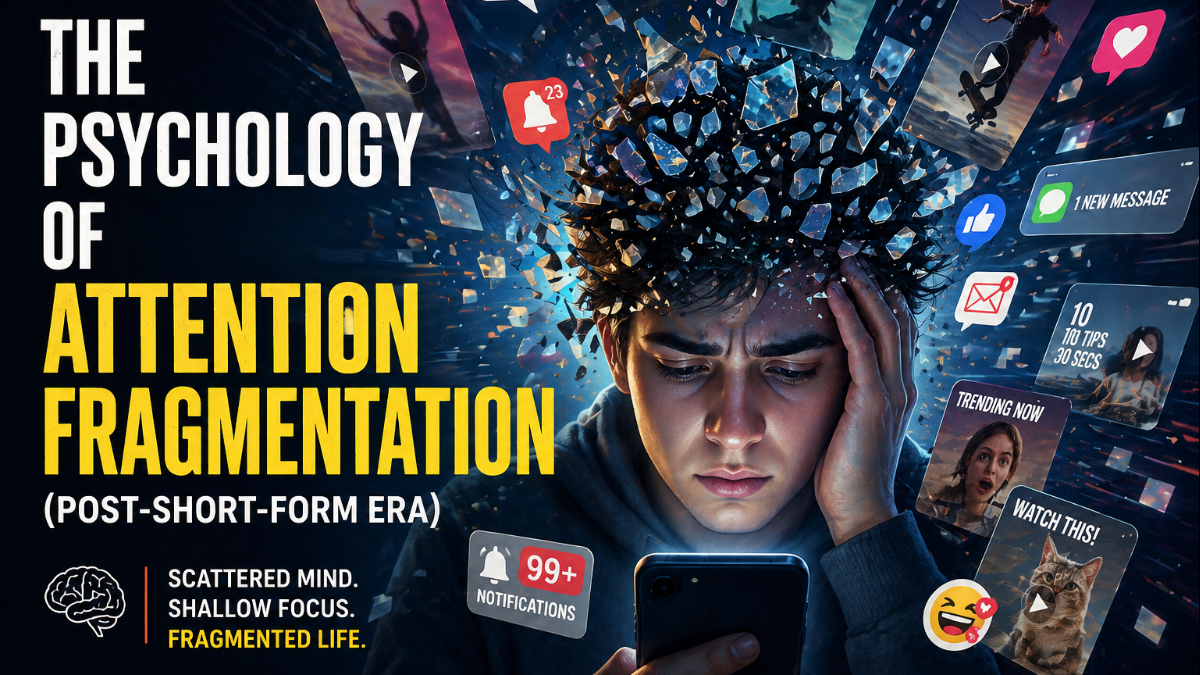
The Dopamine Trap – Why We Can’t Stop Scrolling

The Dopamine Trap – Why We Can’t Stop Scrolling

Article | Life
The dopamine trap explains compulsive scrolling behavior driven by unpredictable rewards, habit loops, and digital overstimulation.
The Psychology of Silent Confidence

The Psychology of Silent Confidence

Article | Psychology
Silent confidence is inner self-trust that reduces anxiety, increases influence, and builds powerful presence without seeking external validation.

"Happy Wife, Happy Life" — Wisdom or Manipulation?

Article | Man and woman relationship
The problem is not the phrase itself. The problem is what happens when it gets used as a crowbar — something to pry open a man's wallet, his time, his emotional reserves, and his sense of self-worth.
Magical Thinking Psychology: Why Your Brain Chooses Comfort Over Truth

Magical Thinking Psychology: Why Your Brain Chooses Comfort Over Truth

Article | Mental health
People have always believed in miracles. We seek them out in desperate times, in quiet hospitals, in late-night internet searches, and in the advice of strangers who seem absolutely certain they know what our bodies need.
PTSD, Trauma, and Anxiety: What No One Tells You When the Danger Is Still There

PTSD, Trauma, and Anxiety: What No One Tells You When the Danger Is Still There

Article | Trauma
Classic post-traumatic stress disorder, the kind studied for decades and defined in the DSM, emerges after trauma ends. The "post" is the whole point.
You need to be logged in to send messages
Login Sign up
To create your specialist profile, please log in to your account.
Login Sign up
You need to be logged in to contact us
Login Sign up
To create a new Question, please log in or create an account
Login Sign up
Share on other sites

If you are considering psychotherapy but do not know where to start, a free initial consultation is the perfect first step. It will allow you to explore your options, ask questions, and feel more confident about taking the first step towards your well-being.

It is a 30-minute, completely free meeting with a Mental Health specialist that does not obligate you to anything.

What are the benefits of a free consultation?

Who is a free consultation suitable for?

Important:

Potential benefits of a free initial consultation

During this first session: potential clients have the chance to learn more about you and your approach before agreeing to work together.

Offering a free consultation will help you build trust with the client. It shows them that you want to give them a chance to make sure you are the right person to help them before they move forward. Additionally, you should also be confident that you can support your clients and that the client has problems that you can help them cope with. Also, you can avoid any ethical difficult situations about charging a client for a session in which you choose not to proceed based on fit.

We've found that people are more likely to proceed with therapy after a free consultation, as it lowers the barrier to starting the process. Many people starting therapy are apprehensive about the unknown, even if they've had sessions before. Our culture associates a "risk-free" mindset with free offers, helping people feel more comfortable during the initial conversation with a specialist.

Another key advantage for Specialist

Specialists offering free initial consultations will be featured prominently in our upcoming advertising campaign, giving you greater visibility.


It's important to note that the initial consultation differs from a typical therapy session:

No Internet Connection It seems you’ve lost your internet connection. Please refresh your page to try again. Your message has been sent

